Last Updated: October 12, 2026
How Kratom Strains Are Named and Why It Matters
Kratom strains are named for two things: the color of the leaf vein at harvest and the region where the tree grew. That naming system is the only map you get when comparing products, so it pays to understand what the labels actually promise.
This guide from INDOKRATOM.CA will be upfront about something most vendor pages skip: strain names are marketing shorthand, not lab-verified categories. Two batches of “White Maeng Da” from different suppliers can differ in alkaloid content. What matters more is how the plant was dried, when it was harvested, and whether the seller tests each batch.
Kratom strains are informal trade names that combine a vein color with a growing region, such as White Thai or Green Malay. The label tells you the general direction of reported effects, not a guaranteed result. Most of what people describe, energy, focus, alertness, comes from the balance of alkaloids like mitragynine and speciogynine in that particular batch.
Keep reading, and we will walk through the questions to ask before you buy any of them.
Kratom Strains by Color: What the Labels Tell You
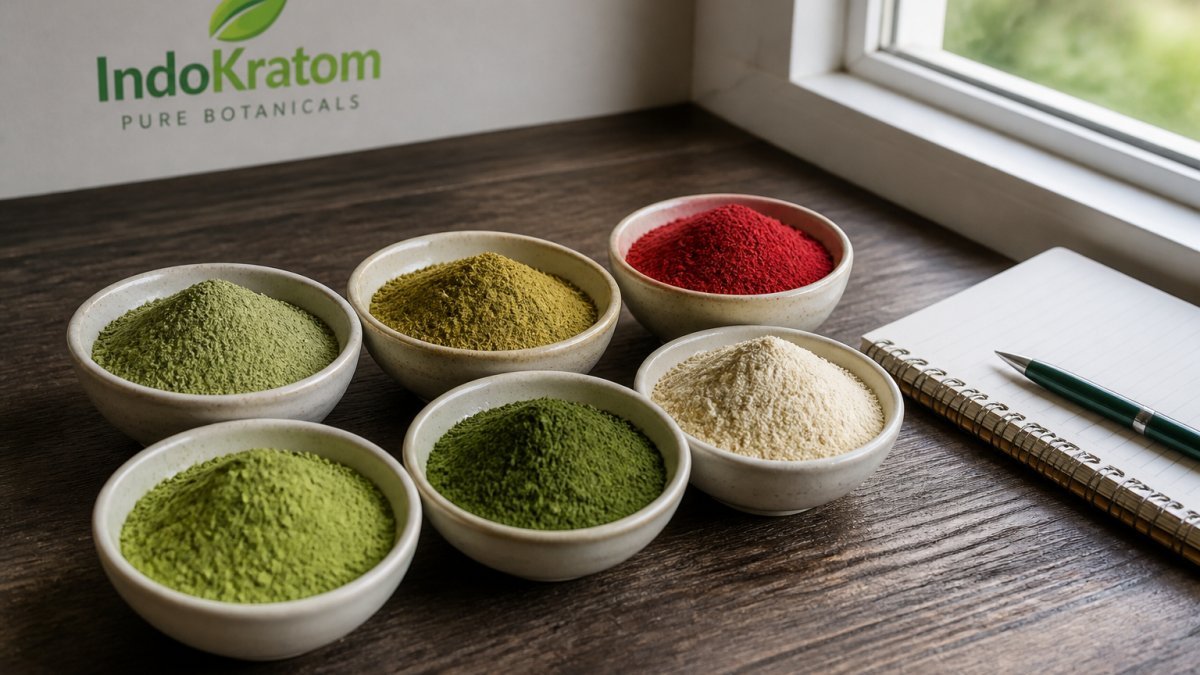
Vein color is the first filter most buyers use, and it is a reasonable starting point. Leaf veins shift color as the leaf matures, and harvesters sort accordingly. The convention is simple:
- White vein: picked early, commonly described as the most stimulating
- Green vein: mid-maturity, often called balanced
- Red vein: fully mature, usually associated with relaxation rather than energy
- Yellow vein: a less standardized category, often a drying-method variant
Here is the honest caveat. These categories come from traditional use and vendor convention, not controlled trials. There is no regulatory body that certifies a strain’s effect profile, and no Canadian standard defines what “white vein” must contain.
That does not make the labels useless. It makes them a starting point. If you want stimulation, white and green are the logical first look. If you want the opposite, you already know red is not your answer.
Kratom Strain Chart: A Quick Comparison
Use this table as a starting filter, then read the individual sections below for the reasoning behind each pick. Before the table, here is how the five were selected, because a ranking without stated criteria is just a list.
Selection criteria used for this top five:
- Frequency of mention across publicly available strain guides and community discussions, not vendor marketing pages.
- Distinctness of reported profile, each pick had to occupy a different slot (sharp stimulation, balanced energy, clean focus, steady all-day energy, and a variable blend).
- Separation of reported effects from evidence-backed conclusions, every profile below is labeled as reported, not proven.
A note on evidence quality: there are no controlled human trials establishing that White Maeng Da produces more energy than Green Malay. The categories below come from traditional use, vendor convention, and self-reported experience. Treat them as a starting hypothesis, not a chemical guarantee.
| Strain | Vein Color | Commonly Reported Profile | Best Suited For | Batch Consistency |
|---|---|---|---|---|
| White Maeng Da | White | Sharp stimulation, strong alertness | Early mornings, deadlines | Moderate, varies by drying method |
| Green Malay | Green | Balanced energy, mood elevation | Long workdays | Generally consistent when tested |
| White Thai | White | Clean focus, lighter body feel | Detail-heavy tasks | Moderate, origin claims vary |
| Green Borneo | Green | Steady energy, calm focus | All-day use | Variable, Borneo covers a large landmass |
Two things the table cannot show. First, batch variation: a strain chart is a map of reported effects, not a chemical assay. Alkaloid content shifts with harvest timing, plant age, drying method, and storage. Second, product quality: independent testing for contaminants and batch-specific analysis matter more than the strain name on the label.
1. White Maeng Da
White Maeng Da is a white-vein product.
The “Maeng Da” name itself is worth understanding. It originated as a Thai term implying a grafted or enhanced plant, and today it functions as a quality claim more than a botanical fact. Any seller can label a product Maeng Da. Not every seller can show you why theirs deserves the name.
2. Green Malay
Green Malay is a green-vein strain associated with Malaysia.
3. White Thai
White Thai comes from Thailand and carries a white vein.
4. Green Borneo
Green Borneo comes from the island of Borneo.
The regional origin matters here: Borneo covers a large landmass, and growing conditions vary, so Borneo-labeled products can differ more than the name suggests.
How to Choose Between These Strains
Work through this checklist before you order. It covers the practical questions most guides skip.
Start with your target effect.
- Note that Maeng Da blends vary widely, only choose them if you already know how you respond to individual strains
Then consider the safety context that strain guides rarely mention.
Kratom products are not approved for human consumption in Canada, and the regulatory picture continues to evolve. Health Canada has issued advisories about kratom products, and rules can change.
A few practical points worth knowing:
Finally, track your own response.
That last point matters more than any strain chart. Keep notes on amount, timing, and effect so you can compare across purchases rather than relying on the strain name alone.
Frequently Asked Questions
What kratom is used for energy?
These effects are based on reported experiences, not clinical trials, so individual results vary.
What do kratom strain colors mean?
Vein color refers to the color of the leaf’s central vein at harvest. These labels are not standardized, so the same color name can differ between suppliers.
Are kratom strain names standardized?
No. Strain names like Maeng Da or Borneo are marketing labels, not botanical classifications. The same name can describe different alkaloid profiles depending on the supplier, harvest time, and region.
What does research say about kratom and energy?
Research on kratom is limited and mostly focuses on its alkaloids, such as mitragynine and speciogynine. There is no strong clinical evidence that specific strains reliably boost energy. Treat strain effects as general tendencies, not guaranteed outcomes, and prioritize product quality and safety.
Finding a strain that works for you is only half the problem. The other half is finding a seller whose label actually matches the batch inside the bag, and that is where most buyers get burned. At INDOKRATOM.CA, every botanical product is lab tested for safety and quality, sold strictly for research use, and listed on a simplified site built to load fast and stay up during busy ordering periods. Browse the current strain selection and check batch details before you buy.